Everyone loves a good origin story. This one starts with a phone call, a futures prop firm that didn't exist yet, and a question we'd heard before: "Can you make this work?"
The answer was yes. But not for the reasons most people think.
Top One Futures came to us with nothing. No brand. No website. No email list. No social following. No ad accounts. No historical data. They had a product — a futures prop firm — and the ambition to compete in one of the most saturated verticals in financial marketing.
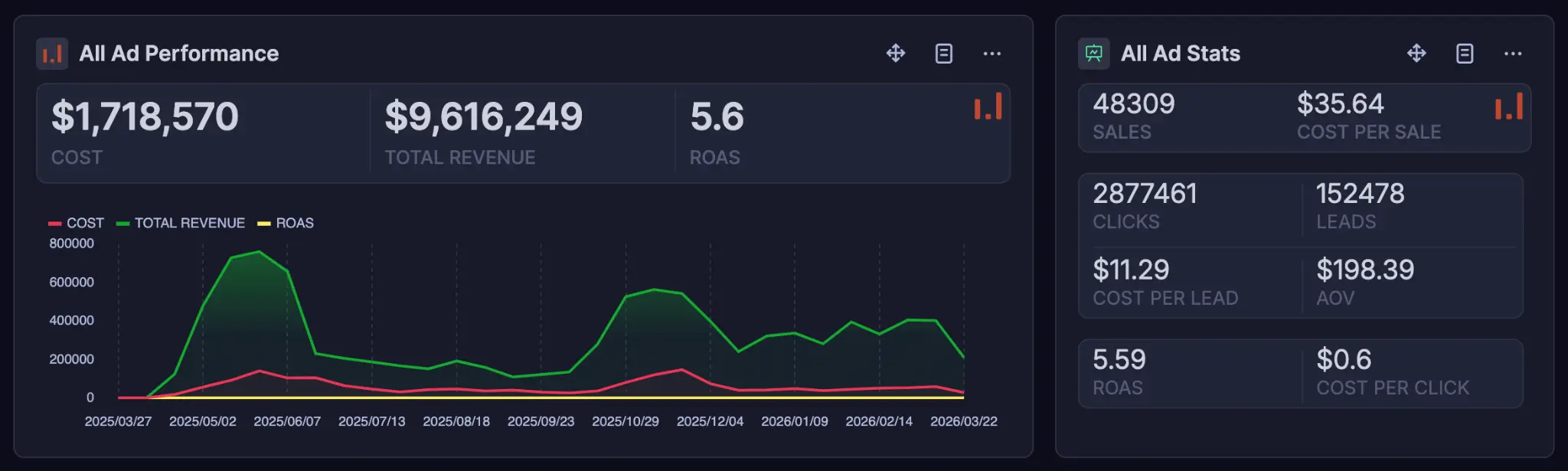
Eleven months later, they'd generated $9.6M in revenue on $1.7M in ad spend, achieved a 5.6x overall ROAS with peaks hitting 12x, and climbed to the top 5 on PropFirmMatch. The full numbers, screenshots, and creative are in the complete case study. This post is about the thinking behind the numbers.
The Problem With Starting From Zero
Most agencies would have told Top One Futures to "build brand awareness first." Run some social content. Get some followers. Maybe do a few influencer deals. Spend three to six months warming up the market before turning on paid.
We didn't do any of that.
Here's why: brand awareness campaigns for a prop firm with zero recognition are a money pit. You're paying to introduce yourself to people who have no reason to care. The CPMs are high, the attribution is murky, and the CFO starts asking uncomfortable questions by month two.
Instead, we went straight to performance. Day one. Paid ads. Conversion-optimized. Because we had something no other agency in this space had.
The Unfair Advantage
We'd already spent millions of dollars advertising prop firms. Not for Top One Futures — for other clients. And in that process, we'd built something invaluable: a deep, cross-account understanding of who buys prop firm challenges, why they buy, when they buy, and what makes them click.
This is the concept we've written about extensively in our piece on why most firms don't actually know who they're selling to. The short version: "males, 18-34, interested in trading" is not a persona. It's a census bracket. Real personas are built from behavioral data — purchase timing, entry points, content consumption patterns, and failed challenge history.
We had all of that. Across multiple accounts. Across multiple geographies. Across millions in spend.
So when Top One Futures asked us to start from zero, we weren't actually starting from zero. We were starting from a position of intelligence that would have taken them years and hundreds of thousands of dollars to build on their own.
The Creative Strategy
The second unfair advantage was creative.
We didn't guess what would work. We already knew. Our cross-account data showed us that lifestyle-driven creative — the car, the watch, the vacation, the freedom — outperformed feature-based ads by 3-5x in the prop firm vertical. This isn't theory. It's tested across millions in spend.
Why? Because traders aren't buying a challenge. They're buying a feeling. We break this down in our trader buying psychology piece — the Dream Chaser wants the Lamborghini, the System Builder wants the data, the Thrill Seeker wants the rush. Each archetype responds to different emotional triggers.
For Top One Futures, we built a creative suite that hit every major archetype simultaneously. Luxury cars. Exotic vacations. High-end watches. Beach lifestyles. Ski trips. Each creative was designed for a specific emotional trigger, and each was placed into segmented asset groups so the AI could optimize delivery to the right people.
Many of those original creatives are still the top-performing ads in the account today. Months later. That's not luck. That's data-informed creative strategy.
The Platform Architecture
We launched across Google Ads and Meta simultaneously — AI campaigns, Search, and PMax on Google, with conversion-optimized campaigns on Meta. This follows the platform allocation framework we use across all financial brand clients, but with a key twist.
Because we had existing audience intelligence, we could build lookalike audiences on Meta from day one. Not from Top One Futures' data — they had none. From our cross-account data on prop firm buyers.
This is the move that most agencies can't make. They don't have the data. They start with broad targeting, burn through budget finding the right audiences, and eventually — maybe — get to profitability by month three or four. We were profitable in weeks.
On Google, we structured campaigns around high-intent search terms while simultaneously running PMax to capture demand across Google's entire network. The segmentation was geographic — US campaigns ran separately from international — because we'd learned from previous accounts that the buyer psychology, CPA, and LTV differ significantly by region.
The Timeline
Here's how it played out:
Month 1: Foundation. Account setup, tracking infrastructure, Hyros integration. Launched initial campaigns with cross-account audience intelligence. Hit 12x ROAS within weeks — not because we got lucky, but because we skipped the testing phase entirely.
Months 2-3: Validation. Confirmed that lifestyle creative angles were outperforming feature-based ads by 4x. Began scaling spend while maintaining efficiency. Validated geographic segmentation strategy.
Months 4-6: Scale. Aggressive scaling phase. Monthly revenue crossed $1M. Expanded asset groups with new lifestyle angles. Top One Futures began appearing on prop firm comparison sites. This is the phase where most firms plateau — we didn't, because our creative framework gave us a constant pipeline of high-performing variations.
Months 7-9: Dominance. Total monthly revenue peaked over $1M, with $700K+ from trackable ad attribution alone. Refined audience segmentation. Launched retargeting funnels. Top One Futures entered the top 10 on PropFirmMatch. Cost per sale dropped below $36.
Months 10-11: Top 5. Achieved top-5 ranking on PropFirmMatch. Total revenue surpassed $9M. ROAS stabilized at 5.6x across all campaigns.
The Numbers That Matter
Let's lay it all out:
| Metric | Result |
|---|---|
| Total Revenue | $9,616,249 |
| Total Ad Spend | $1,718,570 |
| Overall ROAS | 5.6x |
| Peak ROAS | 12x |
| Total Sales | 48,309 |
| Cost Per Sale | $35.64 |
| Leads Generated | 152,478 |
| Cost Per Lead | $11.29 |
| Total Clicks | 2,877,461 |
| Cost Per Click | $0.60 |
| PropFirmMatch Ranking | Top 5 |
These aren't projections. They're tracked via Hyros attribution. You can see the actual dashboard screenshots in the full case study.
What This Teaches About Scaling Financial Brands
There are three lessons from this engagement that apply to any financial brand trying to scale:
First, data compounds. The reason we could launch Top One Futures profitably from day one is that every dollar we'd ever spent on prop firm advertising made the next dollar smarter. This is the moat. Not creative talent, not media buying skill — though both matter. The moat is accumulated intelligence about who buys and why.
Second, creative is strategy. The lifestyle ads weren't just "pretty pictures." They were precision instruments designed to trigger specific emotional responses in specific buyer archetypes. The firms that treat creative as an afterthought — or worse, use the same generic templates as everyone else — are leaving money on the table. We covered this in depth in our piece on why discounts are a crutch that masks weak creative and positioning.
Third, speed kills (in a good way). We didn't spend three months on brand awareness. We didn't run focus groups. We didn't build a 40-page strategy deck. We launched fast, measured everything, killed what didn't work within 48 hours, and doubled down on what did. The seasonal dynamics of prop firm advertising mean that timing matters — the firms that move fast during high-intent windows capture disproportionate market share.
The Full Story
This post covers the strategy and the thinking. For the complete breakdown — including the actual ad creatives, the Hyros dashboard screenshots, the 12-metric results grid, and a testimonial from Top One Futures' CMO — read the full case study here.
If you're a prop firm or financial brand looking at these numbers and thinking "I want that" — let's talk. We don't do pitch decks. We do strategy conversations. And we bring receipts.