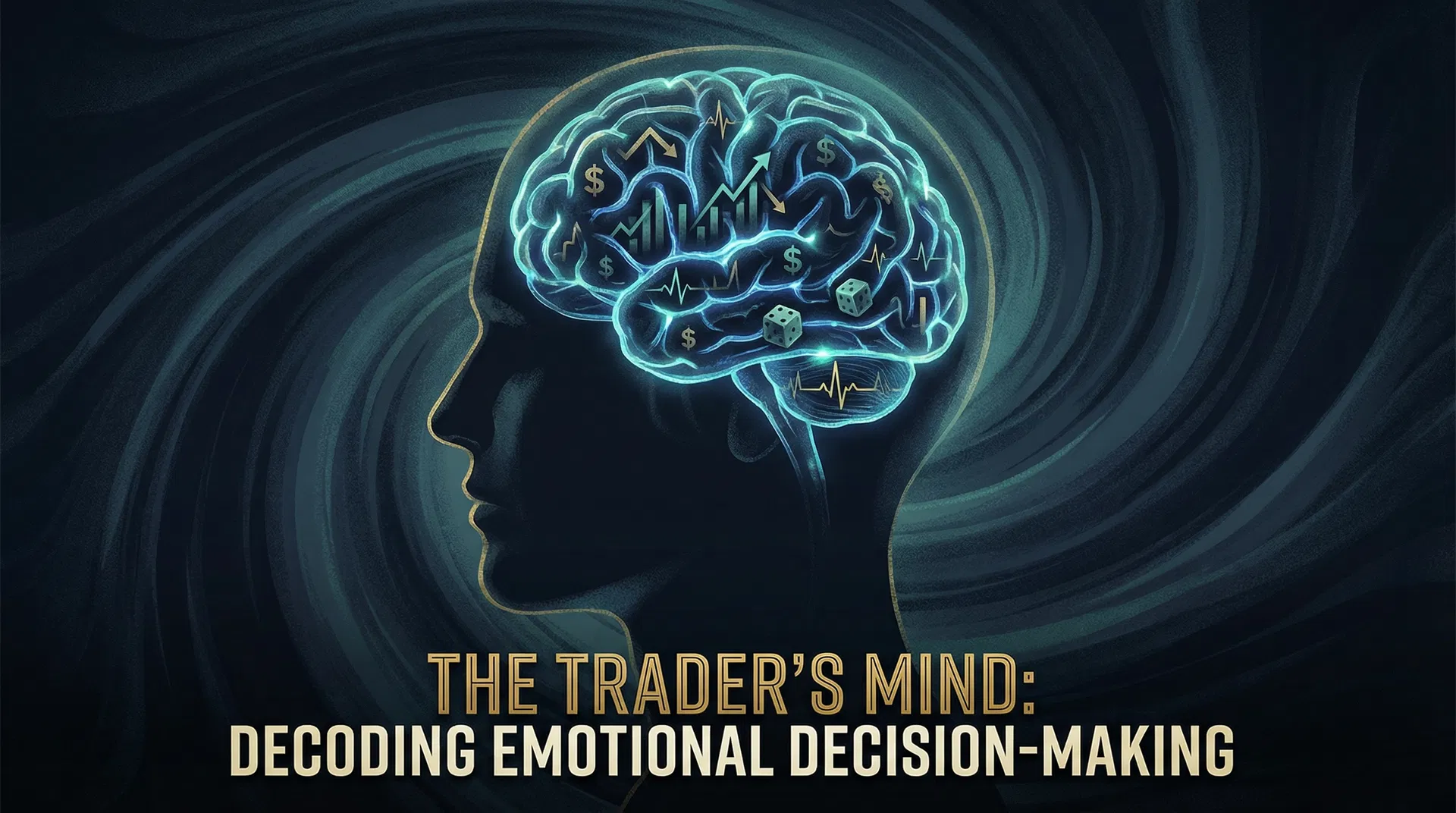
Let's be honest about who we're selling to here.
Traders are professional gamblers. Instant gratification seekers. Thrill riders. Gamers. System hackers. And above all else — highly emotional decision makers.
There are all types of traders out there. Some successful ones that follow rules religiously. But we all know that the overwhelming majority of them — that widely cited 90-95% — are not great at trading. They know it. We know it. And yet they keep buying challenges, evaluations, courses, and signals.
Why? Because understanding that "why" is the entire game.
You're Talking to Them Like Everyone Else
And instead of tapping into what actually drives these people, most prop firms are trying to talk to traders like everyone else would.
"Get funded today!" "Pass your challenge in 3 easy steps!" "Join thousands of successful traders!"
We get it. You want to turn a quick buck. And that approach does generate some revenue. But here's the problem:
That's the easy way. It's also the most crowded, wide, and spacious way to go — with lots of competitors. And you don't stand out in the sea.
Every prop firm is saying the same thing. Same promises. Same stock imagery of charts going up. Same discount codes. When everyone sounds identical, the only differentiator becomes price. And we already talked about why that's a losing game.
Do You Speak Their Language?
Here's where it gets interesting. And where most marketing agencies — even the ones that claim to specialize in finance — completely miss the mark. We covered why generalist agencies fail prop firms in a separate piece, but the short version is: they don't understand the buyer.
To sell to a trader, you need to understand them at a fundamental level. Not just their demographics. Not just their trading style. Their psychology. And beyond psychology, their actual behavioral patterns and personas — because demographics alone tell you almost nothing useful.
The Trader Archetypes
After years of analyzing conversion data across millions in ad spend, we've identified distinct trader archetypes. Each one responds to different messaging, different triggers, and different offers:
The Dream Chaser
This is the largest segment. They've seen the YouTube videos. They've watched someone turn $500 into $50,000. They believe — truly believe — that they're one funded account away from financial freedom. They're not buying a challenge. They're buying hope.
How to reach them: Aspirational messaging that feels achievable. Real trader success stories (not fake ones). Show the path, not just the destination. They need to see themselves in your ads.
The System Builder
These traders are methodical. They backtest. They journal. They have spreadsheets tracking every trade. They're buying a challenge because they genuinely believe their system works and they just need capital.
How to reach them: Data. Numbers. Rules clarity. They want to know your exact evaluation criteria, profit targets, drawdown limits, and payout structure. No fluff. No hype. Just facts.
The Thrill Seeker
Trading is their video game. The dopamine hit of a winning trade is what keeps them coming back. They've probably failed multiple challenges and they don't care. The process IS the product for them.
How to reach them: Urgency and excitement. Limited-time offers actually work well here. Gamification elements. Leaderboards. Competition. Make it feel like a game worth playing.
The Revenge Trader
They've been burned. Lost money. Failed challenges. Got scammed by a signal service. They're angry, skeptical, and looking for redemption. This is a surprisingly large segment.
How to reach them: Empathy first, then proof. Acknowledge their pain. "Yeah, we know. Everyone's promised you the world and delivered nothing." Then show them why you're different — with evidence, not words.
The Calculator
This trader treats prop firm challenges like a math problem. If the challenge costs $200 and the potential payout is $10,000, the expected value calculation is all that matters. They'll buy from whoever offers the best risk/reward ratio.
How to reach them: ROI-focused messaging. Break down the economics. Show them the math. "$299 challenge. Average payout: $4,200. That's a 14x return on your investment."
The Number One Thing They All Care About
Despite all these different archetypes, there is one universal motivator that cuts across every single segment:
Money.
Not in the generic "everyone wants money" sense. In the very specific, deeply personal sense of what money represents to each trader:
- Freedom from a job they hate
- Proof that they're not crazy for believing in this
- Status among their trading peers
- The ability to provide for their family
- Revenge against everyone who told them trading was a scam
When your ad copy connects the act of buying a challenge to one of these deeper motivations, conversion rates skyrocket. We've seen it. We have the data. It's the same principle behind writing ad copy that actually converts traders — lead with emotion, back it with proof.
The Pain Points Nobody Talks About
Want to really get inside a trader's head? Understand their pain:
1. Capital constraints. The number one frustration. They believe in their strategy but don't have the capital to make it meaningful. A $500 account making 10% is $50. A $100,000 funded account making 10% is $10,000. Same skill. Wildly different outcome.
2. Inconsistency. They have great weeks and terrible weeks. The emotional rollercoaster is exhausting. They're looking for structure, rules, and accountability — even if they won't admit it.
3. Loneliness. Trading is isolating. They sit alone staring at charts while their friends and family think they're gambling addicts. Community matters more to traders than almost any other consumer segment.
4. Information overload. There are 10,000 trading strategies, 500 prop firms, and a new guru every week. They're paralyzed by choice and desperate for someone to just tell them what works.
5. The gap between knowledge and execution. They know what to do. They just can't do it consistently. This is the trader's eternal struggle, and it's deeply emotional.
How We Write Copy That Converts
At FiFuel, every piece of ad copy goes through what we call the "Trader Truth Filter":
Step 1: Identify the archetype. Who are we talking to in this ad? A Dream Chaser needs different words than a System Builder.
Step 2: Find the pain. What specific frustration does this person feel right now? Not generic pain. Specific, visceral, "I felt that" pain.
Step 3: Connect to the deeper motivation. The challenge isn't the product. The funded account isn't the product. The LIFE that the funded account enables — that's the product.
Step 4: Prove it. Every claim backed by data. Every promise supported by evidence. Traders are skeptical by default. You have to earn every inch of their trust. This is the trust pillar we talk about — it's non-negotiable.
Step 5: Make the next step obvious. Don't make them think. Don't give them 5 options. One clear CTA. One clear path. Remove every possible friction point.
The Difference This Makes
When you stop talking to traders like they're generic consumers and start speaking their actual language, the numbers change dramatically:
- Click-through rates jump 2-3x because the ad feels like it was written for them specifically
- Cost per acquisition drops 30-50% because you're attracting buyers, not browsers
- Lifetime value increases 40%+ because you've built a genuine connection, not just made a sale
- Refund rates plummet because expectations were set correctly from the first touchpoint
The Bottom Line
Sell me this pen?
No. Sell me the feeling of finally proving everyone wrong. Sell me the freedom of not checking my bank account before buying groceries. Sell me the look on my wife's face when I tell her I can quit my job.
That's what traders are buying. And if your ads aren't selling that, you're leaving millions on the table.
We know because we've been on both sides. We understand these people because we've spent years studying them, talking to them, and converting them. Not with tricks. Not with discounts. With words that hit different because they're true.
That's the pen. Want to write with it?